|
|
| Session 1: Getting Started with AI and Differentiated Instruction |
This session will explore the foundational principles of a differentiated classroom and how they intersect with the emerging use of AI in teaching and learning. Educators will examine common tensions related to AI use, such as balancing efficiency with the human act of teaching when leveraging AI to support diverse student needs. Through reflection and discussion, participants will identify their own readiness and entry points for both differentiation and AI integration. The session is designed to ground teachers in both the “why” and the “how” of using AI to support responsive instruction.
Objectives:
- Identify the principles that support a differentiated classroom
- Evaluate specific tensions related to AI use to support diverse student learning needs
- Self-assess personal entry points to both differentiated instruction and AI use
|
| |
| Session 2: Using AI to Craft High-Quality Curriculum |
A foundational principle of differentiated instruction is the use of an invitational, high-quality curriculum. In this session, educators will explore how to thoughtfully leverage AI tools to design learner-centered objectives and assessments that are both rigorous and coherent. The session will also address how to critically evaluate AI-generated content for accuracy, bias, and alignment to instructional goals. By the end, teachers will begin developing or refining curriculum components in collaboration with AI.
Objectives:
- Analyze how AI tools can support the design of an invitational curriculum, including objectives and assessments
- Apply strategies for prompting AI to generate high-quality content that are rigorous and coherent
- Evaluate AI-generated curriculum resources for accuracy, alignment, and potential bias
|
|
| |
| Session 3: Assessment, Feedback, and Grading with AI |
This session will explore the interconnected relationship between ongoing assessment, feedback, and grading. Participants will examine ways to use AI to generate high-quality assessment items, analyze student work, and provide timely, actionable feedback. The session will also address ethical considerations, including academic integrity, bias, and maintaining teacher judgment in grading decisions. By the end, participants will identify practical strategies for integrating AI into their assessment and feedback practices while preserving fairness and teacher-student relationships.
Objectives
- Analyze the relationship between assessment, feedback, and grading
- Explore how AI tools can support the creation of ongoing checks for student understanding
- Apply strategies for using AI to generate timely, specific, and actionable feedback for students
- Evaluate the ethical implications of using AI in assessment and grading, including issues of bias, accuracy, and academic integrity
|
| |
| Session 4: Partnering with AI to Design Differentiated Activities Based on Readiness and Choice |
In this session, educators will explore how to partner with AI tools to design differentiated learning activities that respond to students’ readiness levels and provide meaningful choice. Participants will examine how AI can help generate tiered tasks, flexible pathways, and varied instructional supports while maintaining alignment to the same learning goals. The session will also emphasize the importance of teacher judgment in refining AI-generated ideas to ensure they are appropriate, engaging, and equitable. Practical examples will be shared to help participants create differentiated activities that promote student agency.
Objectives
- Analyze how AI can support the design of differentiated activities based on student readiness and choice
- Refine existing activities using AI to better meet student needs
- Evaluate and refine AI-generated activities to ensure alignment, rigor, and responsiveness to diverse student needs
|
|
| |
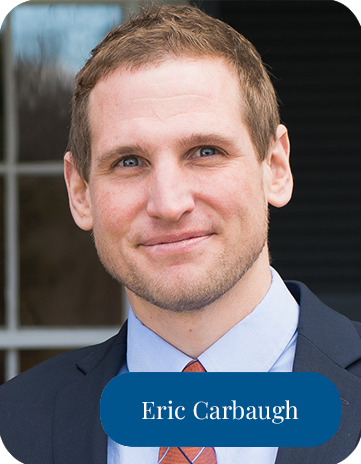
| About Eric Carbaugh |
Areas of Expertise:
- Differentiated Instruction
- Understanding by Design
- Assessment
- Equitable Grading
- Math Best Practices
- Using AI to Support Research-Based Practices
Dr. Carbaugh is a skilled educator with primary and secondary teaching experience; an award-winning, tenured university professor; and an effective and seasoned educational consultant. He is currently a Full Professor at James Madison University in the Department of Middle, Secondary, and Math Education, where he teaches a variety of undergraduate and graduate classes. A common thread among his work is helping others understand the relationship between the learning environment, curriculum, instruction, and assessment, and how educators can leverage these related elements to better meet the needs of diverse learners.
Eric began his career in education as a high school social studies teacher before moving to an elementary school to teach language arts and social studies. He served as a classroom differentiation and curriculum coach, where he worked with middle and high school teachers to help them implement best educational practices in their classrooms.
Eric’s work with schools focuses on helping educators design student-centered classrooms through a variety of pathways, including differentiated instruction, learner-driven assessment, and meaningful curriculum. More recently, these workshops have evolved to include Generative AI (GenAI) to assist educators with this important design work. He also regularly presents at both international and national conferences on professional development topics related to assessment, differentiated instruction, UbD/curriculum design, GenAI use, instructional coaching, equitable grading, and other educational best practices.
Eric has co-authored several books, including Designing Authentic Performance Tasks and Projects: Tools for Meaningful Learning and Assessment (iste+ascd), Principles and Practices for Effective Blended Learning (iste+ascd), Building Educator Capacity Through Microcredentials(iste+ascd), and The Differentiated Flipped Classroom: A Practical Guide to Digital Learning (Corwin). Dr. Carbaugh has also authored several articles for iste+ascd’s flagship practitioner journal Ed Leadership, including: “Three Ways AI can Customize Assessments,” “Student Choice, Minus the Chaos”, and “The Economics of Grading.”
Eric holds a Doctor of Philosophy in Educational Psychology from the University of Virginia, a Master’s degree in Education from the University of Mary Washington, and a Bachelor of Arts in Government and Economics from the University of Virginia. |
|
| Dates & Timings |
October 15th, 22nd, 29th & November 5th, 2026
Each Session is for 2 Hours
15th & 22nd October 2026
New York 6:00 am | London 11:00 am | Zurich 12:00 pm | Dubai 2:00 pm
India 3:30 pm | Hong Kong 6:00 pm | Melbourne 9:00 pm
29th October 2026
New York 6:00 am | London 10:00 am | Zurich 11:00 am | Dubai 2:00 pm
India 3:30 pm | Hong Kong 6:00 pm | Melbourne 9:00 pm
5th November 2026
New York 6:00 am | London 11:00 am | Zurich 12:00 pm | Dubai 3:00 pm
India 4:30 pm | Hong Kong 7:00 pm | Melbourne 10:00 pm
Note: This workshop will be recorded
Please click here to check your time for the workshop |
| Investment |
USD 450 Closing Date 1st October 2026
Includes: Certificate of Participation for 10 Professional Development Hours. |
 |
|
|
| Upcoming Workshops |
 |
| Journey Through a Day in Kindergarten: Nurturing a Culture of Inquiry |
| Throughout this online workshop, participants will have an opportunity to experience a day in the life of a Kindergarten class (children turning six this academic year) at the International School of Paris. |
 October 31st, November 7th, 14th & 21st, 2026 October 31st, November 7th, 14th & 21st, 2026 |
 USD 500 USD 500 |
|
 |
|
|
| |
| |
 |
| The Role of Formative Assessment in Differentiation |
| While there is a great deal of conversation in schools about formative assessment, it is relatively rare to see it implemented in classrooms in ways that reflect its intent or its potential to be a game changer for teaching and learning. |
| November 10th, 17th, 24th & December 1st, 2026 |
| USD 500 Closing Date 1st November 2026 |
|
|
|
|
| |
| |
 |
| Creating a Culture of Service |
| How do we move towards creating a sustainable culture of service that has value and purpose for all stakeholders and leads to the outcomes we describe. |
| November 17th & 19th, 2026 |
| USD 350 |
|
|
|
|
| |
| |
| |
|
|
|
|