|
|
| Overview |
In recent years, much of the conversation around literacy instruction has focused on the Science of Reading. But after students have learned to decode and read with fluency, how do we help them continue to grow as readers?
Our most important job as teachers of comprehension is to help children understand and think deeply about increasingly longer and more complex texts. Part of this equation is robust vocabulary instruction, as well as looking at structures of language. But as students move past the primary years, research shows that growth in reading succeeds or fails in direct proportion to the level of student engagement. Keeping in mind the developmental level of readers grades 3-8, a social element to reading instruction becomes critical. From a teacher’s point of view, this means teaching into and providing opportunities for:
- a balance of whole class texts and independent choice reading, narrative and expository;
- impactful book talk, scaffolded and independent;
- a variety of formal and informal reading responses, sometimes interactive and sometimes individual;
- project-based content area reading with a clear, student-driven purpose, e.g., community involvement, social action, building or making something, etc.;
- engaging word work (e.g., vocabulary, structures of language) in the context of comprehension;
- centering the connection between reading and writing instruction (i.e, reading like a writer, writing like a reader);
- exploring connections between visual literacy and reading.
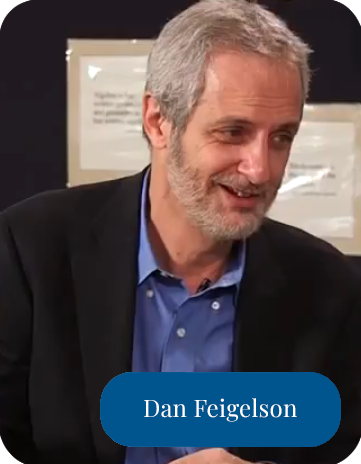
In this interactive webinar series, Dan will explore concrete ideas for how to teach students in upper elementary and middle school to think deeply about narrative and expository text. Participants will come away with practical, classroom-ready strategies, structures, and routines for helping older students become versatile, independent comprehension decision makers. |
|
| |
| Session One – Research and Getting Started: Book Talk, Reading-Writing Connections, and Identity |
- What exactly do we teach older readers? The content of comprehension?
- What research tells us about the importance of engagement, choice, and reading response for upper elementary and middle school readers?
- Creating a culture of engagement through book talk
- “I’m the sort of reader who…”: Learning student’s reading personalities
- Where do vocabulary instruction and studying complex language structures fit in?
|
| |
| Session Two – Whole Class, Small Group, and Independent Reading: Gradual Release Toward Deeper Comprehension |
- Using whole class texts as a springboard for engaging, direct instruction
- Balancing teacher comprehension questions with student driven inquiry
- Literary essay, jots, and virtual correspondence: Formal, informal, and interactive reading responses
- Not Just Guided Reading: Different Models of Small Group Instruction, and When To Use Which
- Read Like a Writer, Write Like a Reader: Making Explicit Connections Between Our Reading and Writing Instruction
|
| |
| Session Three – Differentiating Instruction Through Independent Reading |
- Individual reading conferences: A step-by-step approach
- It’s Not Just A Free For All: Class Routines, Structures, and Accountability to Ensure Independent Reading Remains Productive
- A Democracy of Thought: Sharing the work of independent reading
- Keeping Track: How Do I Stay on Top of What Each Student Is Doing?
- Setting up independent reading partnerships and book clubs
|
| |
| Session Four – The Logistics Will Make You or Break You |
- Management routines that foster student independence
- Tips for Balancing (and Connecting) Whole Class, Small Group, and Independent Reading
- Record keeping and assessment
- Common Stumbling Blocks: Ensuring Book Variety, Keeping Track of Volume, Conferring Around Books the Teacher Hasn’t Read Herself, etc.
- Parallel Planning: Targeting Instruction to the Individual Child While Also Addressing Standards
|
|
| |
| About Dan Feigelson |
| Dan Feigelson is an internationally recognized literacy consultant and author. After decades working extensively in New York City schools as a teacher, staff developer, curriculum writer, principal, and superintendent, he now leads institutes, workshops and lab-sites around the world on the teaching of reading and writing. A regular presenter at national and international conferences, Dan is the author of Radical Listening: Reading and Writing Conferences to Reach All Students (Scholastic 2022); Reading Projects Reimagined: Student-Driven Conferences to Deepen Critical Thinking (Heinemann 2015); and Practical Punctuation: Lessons in Rule Making and Rule Breaking in Elementary Writing (Heinemann 2009). He lives in Manhattan and Columbia County, New York. |
| Dates & Timings |
April 14th, 16th, 21st & 23rd, 2026
Each Session is for 2 Hours
New York 5:00 am | London 10:00 am | Zurich 11:00 am | Dubai 1:00 pm
India 2:30 pm | Hong Kong 5:00 pm | Melbourne 7:00 pm
Note: This workshop will be recorded
Please click here to check your time for the workshop |
| Investment |
USD 450 Closing Date 1st April 2026
Includes: Certificate of Participation for 10 Professional Development Hours. |
 |
|
|
| Upcoming Workshops |
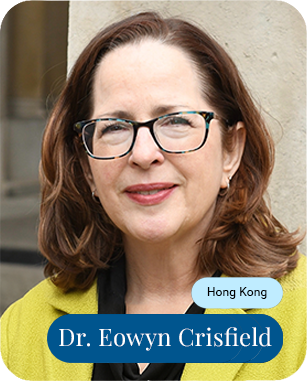 |
| Teaching Learners with English as an Additional Language |
| Teachers in today’s classrooms are increasingly working with students who are learning through English as an Additional Language (EAL). |
 November 7th & 8th, 2026 November 7th & 8th, 2026 |
 Hong Kong Academy Hong Kong Academy |
 USD 700 Early Bird Offer Till 1st April 2026 USD 700 Early Bird Offer Till 1st April 2026 |
|
 |
|
|
| |
| |
 |
| The Asian Intensive Instructional Coaching Institute |
| The Intensive Instructional Coaching Institute is a comprehensive foundational course that gives coaches and administrators everything they need to know to become successful coaching partners. |
| April 21st - 25th, 2027 |
| Dubai |
| USD 1995 Closing Date 15th April 2027 |
|
|
|
|
| |
| |
| |
|
|
|
|