|
|
| A Practical, Research-Informed Workshop for Classroom Teachers |
Teachers in today’s classrooms are increasingly working with students who are learning through English as an Additional Language (EAL). These learners may be new to English, developing confidence, or already fluent in everyday conversation while still grappling with the academic language of the curriculum.
Many teachers support EAL learners thoughtfully and intuitively, but often without formal preparation. Speaking English well does not automatically mean knowing how to teach it, and most teachers were never trained to develop language alongside subject learning. As a result, teachers are frequently left navigating questions such as:
- Why do some EAL learners sound fluent but still struggle academically?
- How much language support is appropriate without lowering expectations?
- How can assessments fairly reflect what EAL learners actually know?
- What does effective EAL support look like in mainstream classrooms?
This weekend workshop has been designed to address these questions directly. |
| |
| Workshop Rationale and Approach |
This professional learning programme focuses on EAL as a teaching and curriculum responsibility, not a specialist add-on. Grounded in research on second language acquisition and classroom practice, it supports teachers to develop the knowledge, judgement, and practical strategies needed to ensure EAL learners have equitable access to learning.
Rather than offering a checklist of strategies, the workshop builds a coherent understanding of how English develops over time, how language shapes access to curriculum and assessment, and how teachers can integrate EAL-sensitive practice into everyday teaching across subjects and age groups.
The emphasis throughout is on practical application, professional reflection, and realistic classroom decision-making. |
|
| Topics: |
Over the course, we will cover the following topics:
Understanding EAL Development in School Contexts
We begin by developing a clear understanding of how English as an Additional Language is acquired in school settings. This includes exploring what research tells us about second language acquisition, the difference between conversational fluency and academic English, and why progress often appears uneven.
Participants examine what realistic progress looks like for EAL learners at different stages, and why learners may continue to need language support long after they appear fluent. This foundation helps teachers interpret learners’ language needs more accurately and avoid common misconceptions.
Getting to Know Your EAL Learners
EAL learners arrive in classrooms with diverse linguistic, educational, and cultural histories. This part of the workshop supports teachers to understand how factors such as prior schooling, literacy in other languages, mobility, and identity influence language development and learning.
Teachers consider how these factors show up in classroom behaviour, participation, and attainment, and how assumptions about ability or motivation can mask underlying language need. The focus is on building informed, empathetic understanding that strengthens professional judgement, and developing EAL-sensitive practices and pedagogy.
Effective EAL Practice in the Classroom
This core section of the workshop focuses on what effective EAL support looks like in mainstream classrooms. Teachers explore how everyday teaching choices—teacher talk, task design, materials, and routines - either support or restrict access to learning for EAL learners. Participants work with concrete classroom examples to examine how to:
- Scaffold language without reducing cognitive challenge
- Make instructions, explanations, and tasks more accessible
- Support EAL learners in participating meaningfully in lessons
- Balance differentiation with high expectations
The emphasis is on refining existing practice rather than adding new layers of work.
Literacy Development for EAL Learners
Learning to read and write in English while still developing spoken proficiency presents specific challenges. This section explore show literacy development differs for EAL learners and why reading and writing often lag behind oral language.
Teachers analyse authentic classroom materials to identify hidden language barriers in texts and tasks, and explore ways to adapt resources to support literacy development without oversimplifying content. We also explore the research on biliteracy and how we can support positive skill transfer across languages.
Assessing EAL Learners Fairly and Accurately
Assessment is one of the areas where teachers often feel least confident when working with EAL learners. This part of the workshop focuses on how language proficiency interacts with assessment performance, and how tasks can unintentionally measure English rather than understanding.
Teachers explore how to:
- Distinguish conceptual understanding from language limitation
- Design and adapt assessments that are linguistically fair
- Use formative and summative assessment to track both content learning and language development
- Make defensible, professional judgements about progress
The aim is to support assessments that are both rigorous and equitable.
Using Learners’ Languages as a Resource for Learning
EAL learners naturally draw on all their languages to think and learn. This section introduces research-informed approaches that recognise and harness this reality, including translanguaging.
Teachers explore when and how learners’ home languages can be used purposefully to support comprehension, reasoning, and engagement, while maintaining clarity and focus in English-medium instruction. Practical examples help participants consider how language flexibility can enhance learning rather than undermine it.
Bringing It All Together: Strengthening EAL Practice Across the Classroom
The final part of the workshop brings together learning from across the programme. Teachers reflect on how their understanding of EAL has developed and how this can shape everyday classroom practice.
Participants work collaboratively to:
- Identify priority areas for developing EAL-sensitive teaching
- Consider how EAL practice aligns with curriculum goals and assessment expectations
- Set realistic, achievable next steps for their own classrooms. The focus is on sustained improvement rather than quick fixes.
|
|
| By the End of the Workshop, Participants Will: |
- Have a clear, research-informed understanding of how EAL develops overtime
- Be better equipped to interpret EAL learners’ progress and needs
- Understand how language affects access to curriculum and assessment
- Use practical strategies to support EAL learners with in mainstream teaching
- Feel more confident making professional judgements about EAL provision
- See themselves as capable, language-aware teachers rather than “non-specialists”
This workshop supports teachers to move beyond intuition and goodwill towards confident, informed EAL practice. It recognises the complexity of teaching learners with English as an Additional Language and equips teachers with the understanding and tools needed to meet that challenge thoughtfully and effectively. |
| |
| Potential Audience: |
| Suitable for teachers of all subjects and ages. |
| |
| About Dr. Eowyn Crisfield |
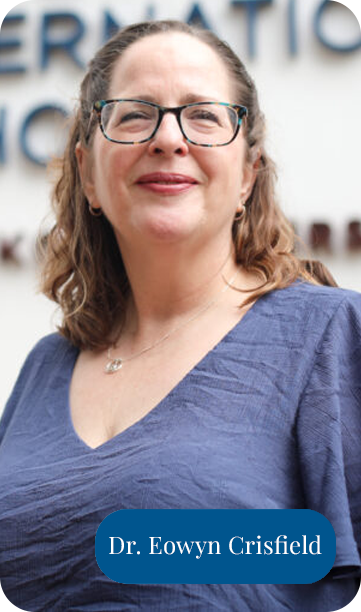
| Dr. Eowyn Crisfield is a specialist in teaching English as a second/foreign language, teacher-training, and bilingualism. Since 2003, she has specialised in parent and teacher education for bilingualism. She is author of Bilingual Families: A practical language planning guide (2021) and co-author of Linguistic and Cultural Innovation in Schools: The Languages Challenge (2018). She is also an Honorary Norham Fellow at the University of Oxford. |
|
|
| Investment |
USD 800 Closing Date 1st November 2026
Includes: Certificate of Participation for 16 Professional Development Hours, Lunch and Coffee Breaks. |
|
|
| Upcoming Workshops |
 |
| Accelerating the Development of Formative Assessment with Artificial Intelligence |
| We now know that supporting teachers in their development of classroom formative assessment is one of the most, if not the most, effective way to improve student engagement and achievement, even when achievement is measured using standardized tests and exams. |
 March 30th & 31st, 2027 March 30th & 31st, 2027 |
 Bangkok Patana School Bangkok Patana School |
 USD 750 Early Bird Offer Till 1st December 2026 USD 750 Early Bird Offer Till 1st December 2026 |
|
 |
|
|
| |
| |
| |
|
|
|
|